
Shopping Cart
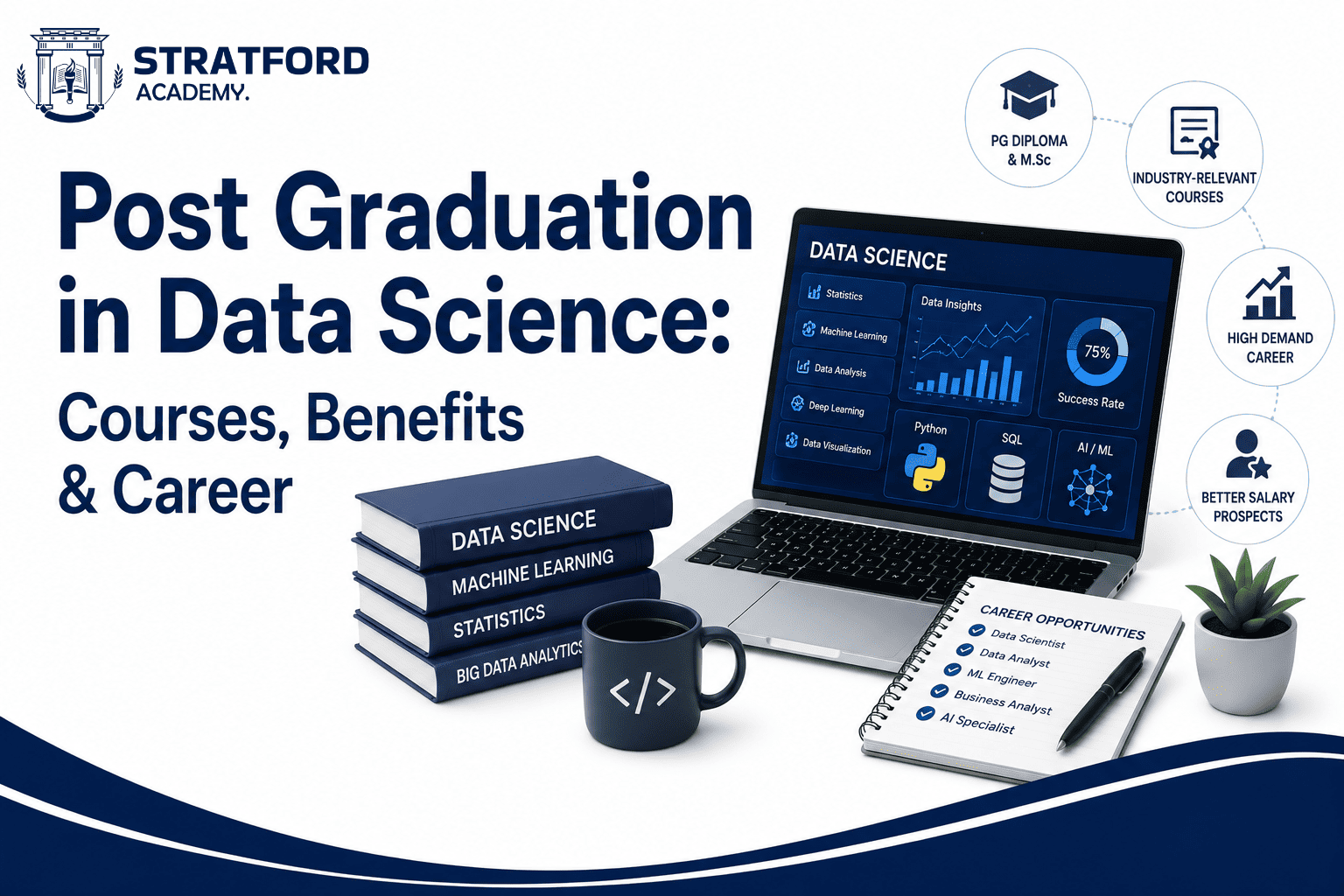
Post Graduation in Data Science: Courses, Benefits & Career
 Bookmark
Introduction
Data is everywhere—from social media and online shopping to healthcare, banking, and artificial intelligence. Every click, purchase, and digital interaction creates valuable information. Organizations need professionals who can analyze this data and turn it into meaningful insights. This growing demand has made Post Graduation in Data Science one of the most valuable educational choices for students and working professionals.
A postgraduate qualification helps learners move beyond basic analytics and develop advanced skills in programming, statistics, machine learning, big data, and business intelligence. These programs combine theoretical knowledge with practical projects, enabling students to solve real-world business problems using data.
Whether you have recently completed your bachelor's degree or want to switch careers, a postgraduate program can significantly improve your technical expertise and employment opportunities. Industries such as healthcare, finance, retail, manufacturing, education, cybersecurity, and technology actively recruit skilled data science professionals.
This guide explains everything you need to know, including courses, eligibility, career opportunities, salaries, benefits, and how to choose the right program.
What Is a Post Graduation in Data Science?
A Post Graduation in Data Science is an advanced academic program designed to teach students how to collect, process, analyze, and interpret large datasets. It combines mathematics, statistics, computer science, and artificial intelligence to solve business and research problems.
Unlike undergraduate programs, postgraduate courses focus on advanced analytical methods, predictive modeling, machine learning algorithms, cloud computing, and real-world applications. Students also gain hands-on experience through live projects, case studies, internships, and capstone assignments.
Most programs include practical training using industry-standard tools such as Python, R, SQL, Tableau, Power BI, TensorFlow, Apache Spark, and cloud platforms.
Graduates become capable of transforming raw data into strategic insights that help organizations make smarter decisions.
Why Choose a Post Graduation in Data Science?
The demand for data professionals continues to rise as businesses increasingly rely on data-driven decision-making. A postgraduate qualification provides deeper technical knowledge and makes candidates more competitive in the global job market.
Some major benefits include:
- Better career opportunities across industries
- Higher salary potential compared to many traditional careers
- Strong demand for skilled professionals worldwide
- Opportunity to work on AI and machine learning projects
- Practical experience through real-world datasets
- Better chances for leadership and research roles
- Flexibility to work in multiple industries
- Continuous learning in an evolving technology field
For students interested in analytics, technology, and problem-solving, this qualification offers long-term career growth and global employment opportunities.
Types of Post Graduation in Data Science Programs
Students can choose from several postgraduate options depending on their educational background, career goals, and available time.
Master's Degree
A full-time master's program usually lasts between one and two years. It offers comprehensive academic learning, research opportunities, internships, and industry exposure.
Postgraduate Diploma (PG Diploma)
A PG Diploma focuses on practical industry skills and generally takes 6–12 months. It is ideal for graduates who want faster career entry.
Online Postgraduate Programs
Many universities and educational platforms offer flexible online learning. Students can complete assignments remotely while continuing their jobs or studies.
Executive Programs
Designed mainly for working professionals, executive programs focus on advanced business analytics, AI implementation, leadership, and strategic decision-making.
Each program offers different learning experiences, so students should choose based on their career objectives, budget, and learning preferences.
Eligibility Criteria for Admission
Admission requirements for a Post Graduation in Data Science program vary by university and country, but most institutions look for applicants with a strong academic foundation and an interest in analytics and technology. While some programs are designed for students with technical backgrounds, many also accept graduates from business, economics, or science disciplines after evaluating their quantitative skills.
Common eligibility requirements include:
- A bachelor's degree from a recognized university
- Basic knowledge of mathematics and statistics
- Familiarity with programming languages like Python, R, or Java (preferred but not always mandatory)
- English language proficiency for international applicants
- Entrance exam or interview (required by some universities)
Certain universities may also consider relevant work experience, certifications, or personal projects in data analytics, making it easier for career changers to enter the field.
Popular Subjects Covered in the Curriculum
A well-designed Post Graduation in Data Science curriculum balances theory with practical application. Students learn how to manage data, build predictive models, and solve business problems using modern analytical techniques.
Core subjects usually include:
- Statistics and Probability
- Python Programming
- R Programming
- SQL and Database Management
- Machine Learning
- Deep Learning Fundamentals
- Data Visualization
- Big Data Technologies
- Artificial Intelligence
- Cloud Computing
- Business Analytics
- Natural Language Processing (NLP)
- Data Mining
- Predictive Analytics
- Capstone Project or Internship
Many universities also include industry projects where students analyze real datasets, helping them build practical experience before entering the workforce.
Skills You Will Learn
A Post Graduation in Data Science helps students develop both technical and professional skills that employers value. Beyond coding and analytics, the program focuses on critical thinking, communication, and business problem-solving.
Technical skills include:
- Data cleaning and preprocessing
- Statistical analysis
- Machine learning model development
- Data visualization and dashboard creation
- Database management
- Python and SQL programming
- Big data processing
- Cloud-based analytics
- AI model implementation
Professional skills include:
- Analytical thinking
- Problem-solving
- Communication and presentation
- Team collaboration
- Project management
- Business decision-making
- Research methodology
- Time management
Graduates who combine technical expertise with strong communication skills often stand out in competitive hiring processes.
Best Universities and Online Platforms
Students can pursue a Post Graduation in Data Science through universities or online learning platforms, depending on their goals, budget, and preferred study mode.
Leading Universities
Many globally recognized universities offer specialized postgraduate programs featuring research opportunities, industry collaborations, and internships. These programs often provide access to experienced faculty, modern laboratories, and professional networking.
Popular study destinations include:
- United States
- United Kingdom
- Canada
- Australia
- Germany
- Singapore
- Ireland
Online Learning Platforms
Online programs have become increasingly popular because they offer flexibility without compromising on quality. Many include live classes, recorded lectures, industry projects, and career support.
Well-known platforms include:
- Coursera
- Stratford Academy
- edX
- Udacity
- FutureLearn
- Simplilearn
- Great Learning
- UpGrad
When selecting a program, compare accreditation, curriculum, faculty expertise, placement assistance, project opportunities, alumni success, and overall learning outcomes instead of choosing based only on cost.
Top Career Opportunities After Post Graduation in Data Science
Completing a Post Graduation in Data Science opens doors to careers across industries such as healthcare, finance, e-commerce, manufacturing, education, telecommunications, and government. Organizations rely on data professionals to improve decision-making, automate processes, and identify growth opportunities.
Some of the most popular career options include:
|
Job Role |
Primary Responsibilities |
|
Data Scientist |
Build predictive models and analyze complex datasets |
|
Data Analyst |
Interpret data and create business reports |
|
Machine Learning Engineer |
Develop and deploy AI and ML models |
|
Business Intelligence Analyst |
Create dashboards and support business decisions |
|
Data Engineer |
Build and maintain data pipelines |
|
AI Engineer |
Design intelligent applications and automation systems |
|
Big Data Engineer |
Manage large-scale distributed data systems |
|
Quantitative Analyst |
Analyze financial and statistical data |
|
Research Scientist |
Conduct advanced AI and analytics research |
|
Analytics Consultant |
Help organizations solve business problems using data |
As businesses continue adopting AI and automation, professionals with both technical expertise and business understanding will remain highly valuable.
Salary After Post Graduation in Data Science
One of the biggest advantages of pursuing a Post Graduation in Data Science is its strong earning potential. Salaries vary depending on experience, industry, country, technical skills, certifications, and job role.
Typical salary progression looks like this:
|
Experience Level |
Typical Salary Range* |
|
Entry Level |
Competitive starting salaries |
|
Mid-Level (3–5 Years) |
Significant salary growth with experience |
|
Senior Level |
High-paying leadership and specialist roles |
*Actual salaries differ by country, employer, and individual qualifications.
Professionals with expertise in cloud computing, machine learning, deep learning, data engineering, and generative AI often command higher compensation. Building a strong portfolio, earning relevant certifications, and gaining internship experience can further improve salary prospects.
How to Choose the Right Data Science Program
Not every postgraduate program offers the same value. Before enrolling, compare multiple factors to ensure the course aligns with your career goals.
Consider the following:
- Accreditation and university reputation
- Updated curriculum covering AI, machine learning, and big data
- Hands-on projects using real-world datasets
- Internship opportunities
- Placement assistance and career services
- Faculty experience and industry expertise
- Alumni network
- Flexible learning options (online, hybrid, or on-campus)
- Affordable tuition and financial aid
- Industry-recognized certifications
Reading student reviews, exploring alumni success stories, and comparing course syllabi can help you make a more informed decision.
Challenges Students Should Know
Although rewarding, a Post Graduation in Data Science requires consistent effort and continuous learning. Students should be prepared for both technical and practical challenges.
Common challenges include:
- Learning programming languages from scratch
- Understanding advanced mathematics and statistics
- Working with large and complex datasets
- Keeping up with rapidly evolving technologies
- Managing multiple projects and deadlines
- Applying theoretical concepts to real-world business problems
The best way to overcome these challenges is through regular practice, participation in coding competitions, contributing to open-source projects, and building a portfolio that showcases practical skills.
Future Scope of Data Science
The future of Post Graduation in Data Science graduates is highly promising. As organizations generate larger volumes of data, the need for professionals who can extract meaningful insights will continue to grow.
Emerging technologies are expanding the role of data science in areas such as:
- Artificial Intelligence (AI)
- Generative AI
- Healthcare analytics
- Financial technology (FinTech)
- Cybersecurity
- Smart cities
- Internet of Things (IoT)
- Autonomous vehicles
- Climate and environmental research
- Personalized customer experiences
Future data science professionals will increasingly collaborate with AI systems, automate complex workflows, and support strategic decision-making across industries. Continuous upskilling in cloud technologies, responsible AI, and advanced analytics will help graduates remain competitive in the evolving job market.
Ready to Build Your Career in Data Science?
If you're looking for a practical, industry-focused Post Graduation in Data Science program, choose a course that combines expert mentorship, hands-on projects, real-world case studies, and career support. The right program can help you develop in-demand skills in Python, Machine Learning, AI, SQL, and Data Analytics while preparing you for high-growth roles across industries. Explore our Post Graduation in Data Science program today and take the first step toward a successful career in data science.
Conclusion:
A Post Graduation in Data Science is an excellent investment for students who want to build a future-ready career in one of the world's fastest-growing fields. The combination of advanced technical knowledge, hands-on experience, and exposure to real-world business challenges prepares graduates for diverse roles across industries.
Whether you choose a full-time master's degree, a postgraduate diploma, or an online program, selecting a curriculum with practical projects, modern tools, and strong career support will maximize your learning and employment opportunities. As artificial intelligence, machine learning, and big data continue to transform organizations worldwide, professionals with data science expertise will remain in high demand.
If you're passionate about technology, analytics, and solving complex problems, pursuing a Post Graduation in Data Science can be the first step toward a rewarding and future-proof career.
Want to know why thousands of students are choosing data science as a career? Read our guide on Benefits of Doing a Post Graduation in Data Science to explore the key advantages, career opportunities, salary potential, and long-term growth before selecting the right program.

Leave a Comment
Your email address will not be published. Required fields are marked *
Comments
Comments section can be added here for reader engagement.